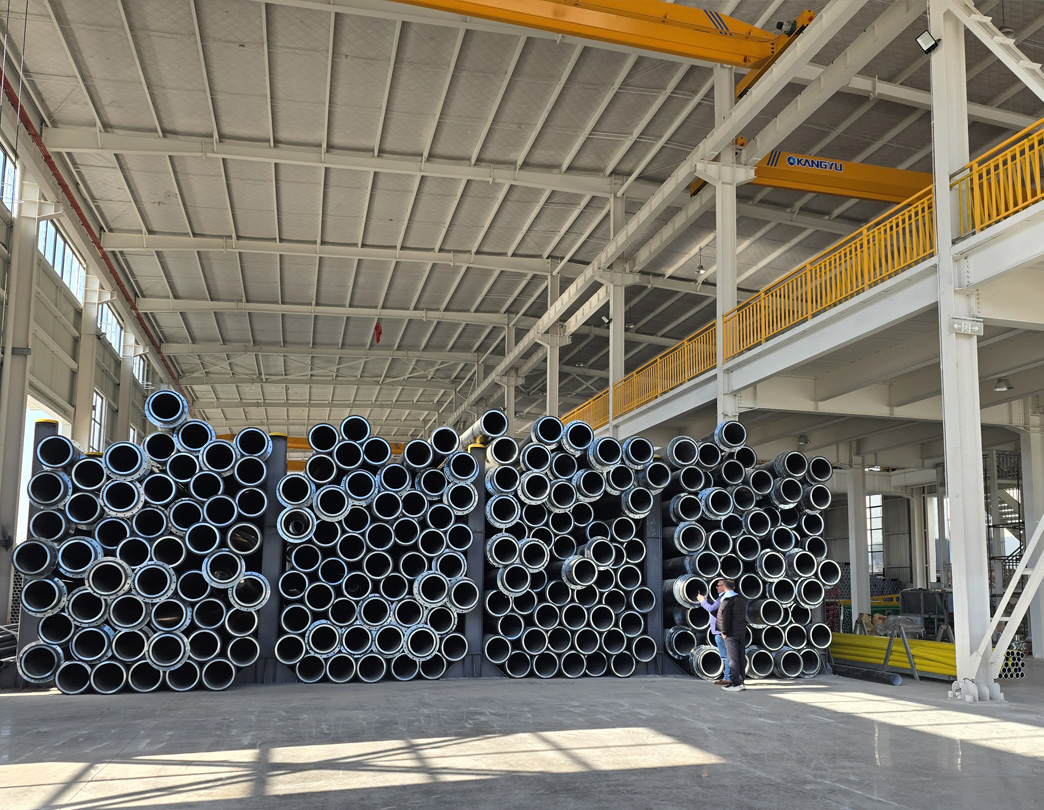

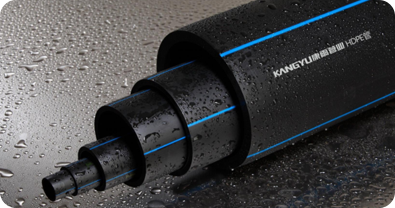
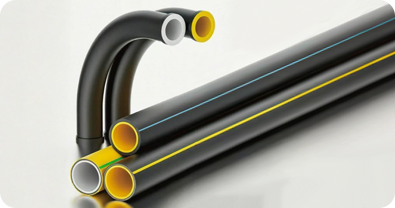
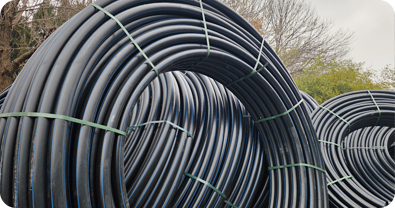
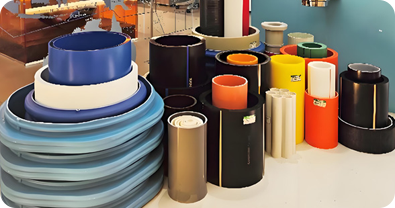
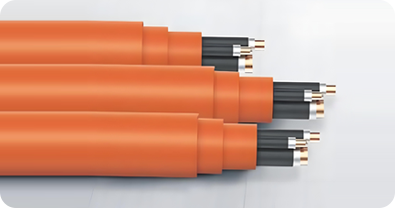

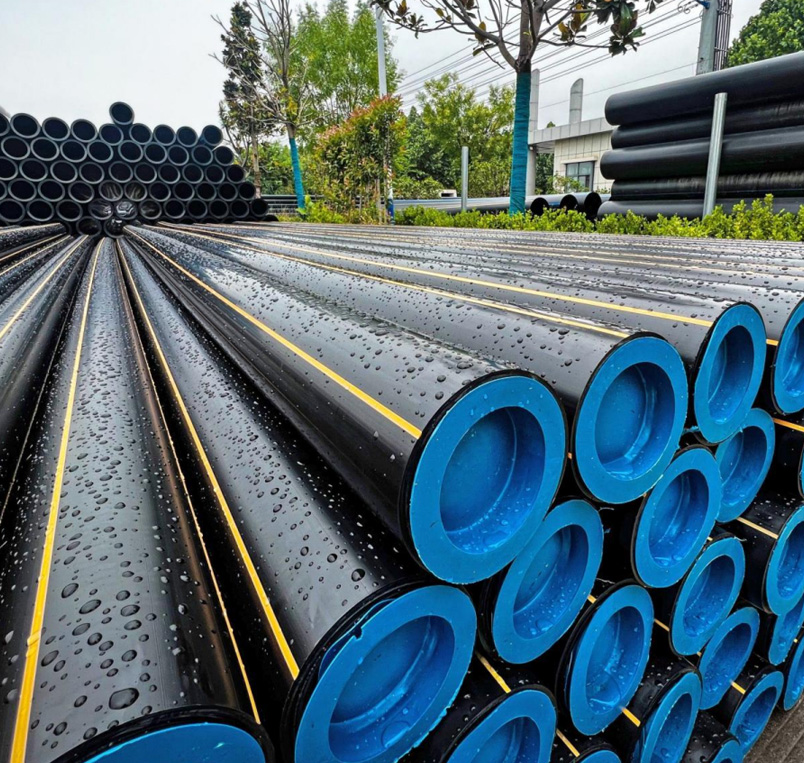
GAS HDPE gas and biogas pipelines are produced with high-performance PE100-grade special raw materials and are manufactured in strict accordance with national gas pipeline standards. They are suitable for the safe transportation of various combustible gases such as natural gas, liquefied petroleum gas, and biogas. They are the core pipes of urban gas pipeline networks and rural biogas systems. The product material is stable, non-toxic and tasteless, and does not react with the transmission medium to ensure the safety and cleanliness of gas supply from the source.
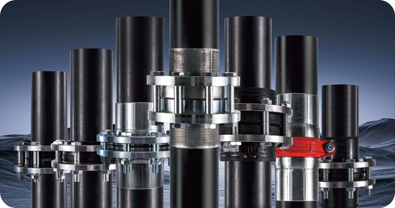
The pipe has excellent flexibility, impact resistance and corrosion resistance. It is not subject to soil acid and alkali erosion when buried in the ground, and does not require additional anti-corrosion treatment. It is not easy to crack in low temperature environment. It can adapt to uneven settlement of the foundation and greatly reduce the risk of leakage. It adopts hot-melt docking and electrofusion connection, and the interface strength is higher than that of the pipe body. It is sealed reliably and has no leakage. The service life can reach more than 50 years, and the construction is light and the operation and maintenance cost is low.
It is widely used in urban municipal gas pipeline networks, residential gas supply, industrial park gas transportation, rural biogas centralized gas supply, coal-to-gas projects, etc. It has high safety performance and stable operation. It is a safe, efficient and durable pipeline in modern gas and biogas transmission and distribution systems.
Excellent air tightness, safe and reliable gas transportation
Special gas-grade HDPE raw material, low gas permeability; integrated hot-melt and electric-fusion connection, zero leakage at the interface;
Comply with GB/T 15820, ISO 4437, EN 1555, ASTM D2513
Resistant to chemical corrosion, suitable for complex biogas media
Resistant to hydrogen sulfide, condensed water, acid and alkali, and microbial corrosion, does not rust or scale, and is suitable for corrosive components of biogas;
Comply with ISO 4433, ASTM D1693, EN 12573
High toughness, impact resistance, settlement resistance and earthquake resistance
Elongation at break ≥800%, excellent flexibility, adaptable to uneven foundation settlement, geological deformation, and earthquake conditions;
Comply with ISO 13479, EN 1046, GB/T 19472
Resistant to rapid crack growth, high explosion-proof safety level
Special PE100 grade raw material, resistant to slow crack growth and rapid cracking, meeting the explosion-proof safety requirements of gas systems;
Complies with ISO 13476, DVS 2207, EN 12814
Smooth inner wall with low friction and high conveying efficiency
The inner wall roughness is ≤0.007mm, and the air flow resistance is small, which reduces transportation energy consumption and reduces impurity deposition;
Comply with ISO 10838, AWWA M55
Stable in wide temperature range, strong environmental adaptability
Long-term use temperature-40℃~40℃, resistant to high and low temperature alternating, suitable for municipal, rural biogas and field laying;
Comply with ASTM F714, GB/T 18252
Insulation and anti-static to avoid the risk of explosion
Non-metallic insulating material, anti-static surface to prevent static sparks from igniting gas and biogas;
Comply with IEC 60079, GB 12476, NFPA 77
Stable pressure-bearing performance and complete pressure levels
SDR11 and SDR17.6 have complete specifications and are suitable for medium and low pressure gas and biogas pressure transportation;
Comply with ISO 4427, GB/T 13663.2
Convenient construction and suitable for trenchless laying
It can be coiled, directional drilled and dragged for construction, with a small bending radius and few joints, which greatly reduces the risk of construction leakage;
Comply with GB 50268, ISO 10460
Long service life and low operation and maintenance costs
The underground design service life is ≥50 years, no anti-corrosion maintenance is required, and it is suitable for long-term gas and biogas gas supply systems;
Comply with GB 50235, AWWA C906